
Table of Contents[Hide][Show]

Fire Emblem Engage is no push-over. Between difficult Paralogues, crushing Skirmishes, and brutal story encounters, players can find themselves more battered than a fish supper in Scotland. This is doubly true when running on harder difficulties. One of the best ways to improve your play is to recognise that Fire Emblem is not just a strategy game, but an RPG.
A lot of issues in Fire Emblem Engage can be solved by understanding your stats and using your units appropriately. Unfortunately, the game somewhat obfuscates which stats do what, and then, on top of that, there is an entirely different branch of stats governing weapons. This guide will go over all of this to get you as informed as you can be.
More Fire Emblem Engage content:
Combat Guide | Beginner Tips | Game Balance | Launch Trailer | Expansion Pass
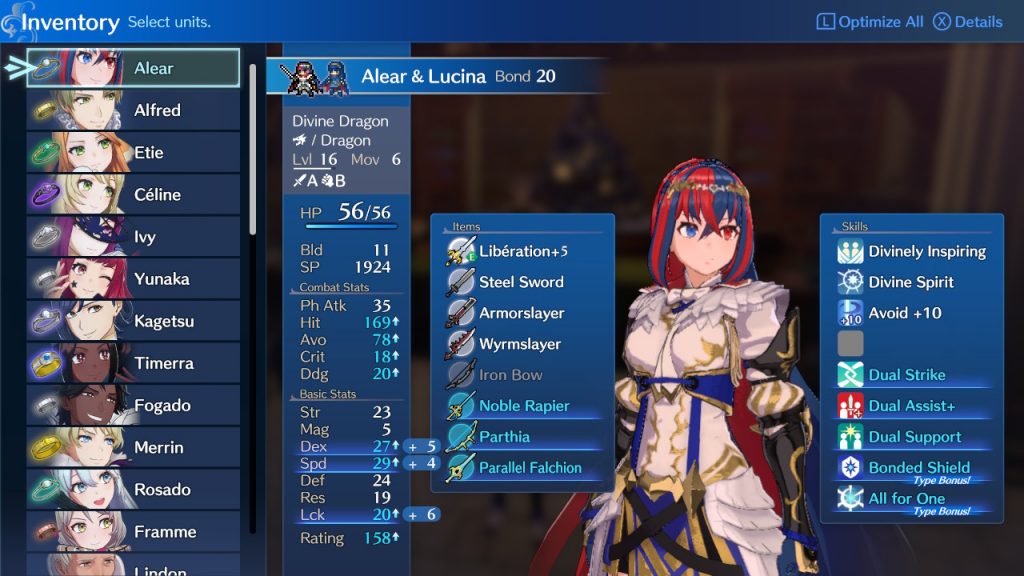
Character Stats Explained
Fire Emblem Engage has 10 primary stats and one nebulous ‘Rating’ that governs how effective each character is at different roles. An important thing to remember is that each character will gain stats as they level up and that they may gain stats in unusual categories.
This is very important to keep an eye on as a character who starts as an axe-wielding melee fighter could naturally grow into more of a mage. Changing classes to accommodate this change in stats can greatly boost a character’s effectiveness.
The stats are as follows:
- HP – How much damage a character can take before they are removed from the battlefield (or killed).
- STR – Effects how much damage a character does with physical attacks
- MAG – Effects how much damage a character does with magical attacks
- DEX – Effects your chances of hitting as well as your critical hit rate.
- SPD – Effects your chances of dodging. In addition, SPD also allows characters to attack twice if they have an SPD stat 5+ points higher than their opponent.
- DEF – Reduces incoming physical damage
- RES – Reduces incoming magical damage
- LCK – LCK is more nebulous and affects various things that aren’t fully explained. It does, however, lower the enemy’s critical hit chance slightly.
- BLD – BLD is a measure of a character’s physical strength. It determines whether or not a weapon is too heavy to wield effectively. If your BLD is too low, you will incur an SPD penalty when attacking with that weapon.
- MOV – How far a character can move per turn.
- Rating – This is the combined total of all your stats. The higher this is, the more stats a character has. This is a quick way of finding your best/most developed characters.
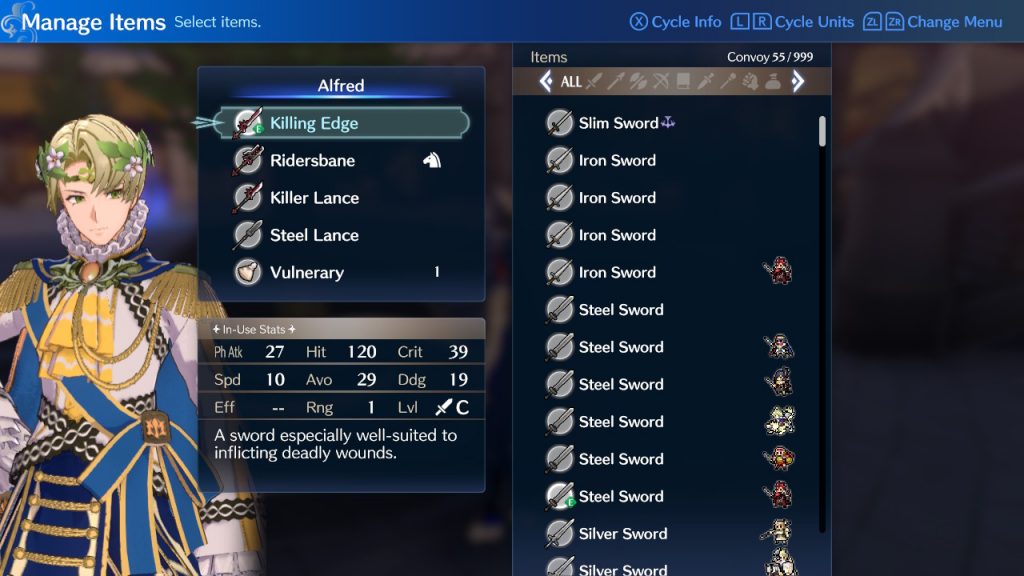
Weapon Stats Explained
Character stats are very important, however, a weapon’s stats are equally important – if not more so – if you want to make the most out of your characters. Every weapon in Fire Emblem Engage is unique, and their mix of stats will greatly impact how a character will play.
A very important thing to note is that more expensive weapons do not always equate to more power in every situation. Be sure to bring multiple weapons, and make sure each character is using the right combination based on their unique preferences in battle. For example, Alfred might not have the BLD to effectively use that new Lance, so consider handing it off to somebody else and stick with your old weapons for the time being.
Weapon stats are as follows:
- PH ATK – How much physical damage your deal in combat
- MAG ATK – How much magic damage you deal in combat
- HIT – How likely you are to land a hit in combat
- AVO – This governs your chance to dodge incoming attacks
- CRIT – Your chance to land a critical hit in combat
- DDG – An odd stat considering AVO already exists, however, DDG specifically deals in dodging critical hits
- RNG – The range of your attack
Note: Fire Emblem Engage will occasionally use MT as a stat. This is for Might, and it is a holdover from previous games. It is the measure of a weapon’s damage potential. This will often replace PH ATK/MAG ATK.
That’s all we have for Fire Emblem Engage for now. Be sure to check out our other guides for tips and tricks.