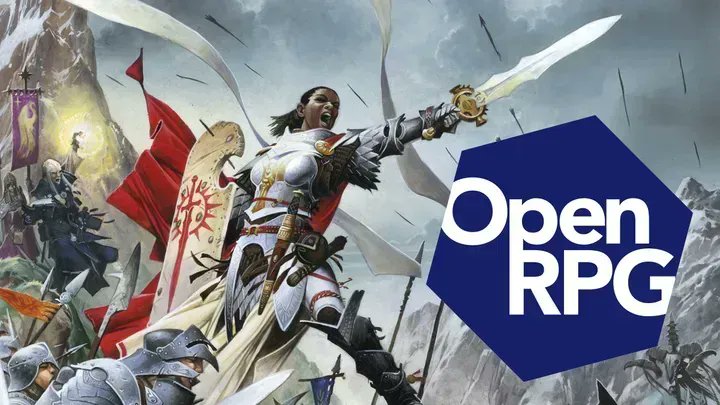
Paizo, the publishers of Pathfinder Roleplaying Game, have revealed their plans following the announcement of Dungeons & Dragons new OGL 2.0. They will be making a new copyright license for themselves and other tabletop RPG companies, to be called the Open RPG Creative License (ORC).
We had explained the situation with Dungeons & Dragons and the OGL 2.0 here. However, there is another side to this involving Paizo, that most readers who aren’t Dungeons & Dragons fans won’t fully understand, so here’s another explainer.
Source: Gizmodo
Paizo is a book and RPG publisher, that launched in 2002 for the purpose of publishing tabletop gaming magazines Dragon and Dungeon for Wizards of the Coast. Both magazines were key periodicals for the Dungeons & Dragons community, featuring spells, creatures, and other concepts that would make their way to the games themselves.
Wizards of the Coast ended their publishing deal with Paizo after five years. Paizo then opted to publish the Pathfinder Adventure Path, a series of new campaigns using the OGL so they can be set in the world of Dungeons & Dragons without a commercial agreement with Wizards of the Coast. Paizo would later expand this to making the Pathfinder Roleplaying Game, now a self-contained RPG, but still following the rules of the OGL.
The creation of the Pathfinder Roleplaying Game, as well as Paizo’s later actions, seemed to anticipate the possibility that they would eventually have to make their own products completely independent from Dungeons & Dragons. For 16 years, they were one of those companies directly competing with Wizards of the Coast, by using Wizards’ own products.
Going back to today, Paizo describes their Open RPG Creative License as a way for all third party tabletop RPG developers to license their games in a way that is “open, perpetual, and irrevocable.”
Paizo wants to shoulder any costs associated with introducing this new copyright license to law themselves. However, to keep it fully independent, they are hiring Azora Law to build this legal framework so that it can “provide a safe harbor against any company being bought, sold, or changing management in the future and attempting to rescind rights or nullify sections of the license.”
Azora Law happens to be headed by Brian Lewis, the same attorney who helped craft the 2000 version of the Dungeons & Dragons OGL.
Paizo is looking to partner with other tabletop RPG developers to build on this license, and form something similar to the Linux Foundation with it. They say they have already reached out to Kobold Press, Chaosium, Green Ronin, Legendary Games, Rogue Genius Games, and Battlezoo.
Truth be told, both Wizards of the Coast and Paizo are likely well within their rights to take the actions they have decided to take today. The Dungeons & Dragons fandom seems to be big enough to accommodate both an official line of products, as well as a breakaway group that are now free to build their RPG frameworks to whatever direction they would want to go.
There may be fans who would rather see Wizards of the Coast take things back to the way they used to be, but they may not be recognizing the gravity of the moment. There are other RPGs and systems out there than Dungeons & Dragons, for example, the G.U.R.P.S. system that the first Fallout games were based on.
An open source and independent version of Dungeons & Dragons means more competition in the tabletop RPG industry. And it is competition in terms and conditions that do not put one side in an unfair position over the other. Dungeons & Dragons fandom aside, this new kind of competition might actually be better for the industry as a whole, especially if it means there are more players willing to break apart from Dungeons & Dragons, forcing Wizards of the Coast to try to make better products themselves.
Source: Gizmodo